- Deal Lift
- Posts
- The Bootstrapped Underdogs Who Beat YC and Built a $40M ARR Rocketship
The Bootstrapped Underdogs Who Beat YC and Built a $40M ARR Rocketship
How two friends turned a tiny browser tool into one of the world’s fastest-growing video creation platforms.

Deal Lift
December 03, 2025
Hey Deal Lifters 👋✨
Today’s edition is the kind of founder story that punches you in the gut — in the best way.
It’s not about billion-dollar budgets.
It’s not about insider networks.
And it’s definitely not about YC golden tickets.
It’s the story of two outsiders who got rejected, ignored, and underestimated…
…and still built a $40M+ ARR bootstrap beast used by 10 million+ creators around the world.
This is the VEED.io story — and trust me, it’s one of the best “persistence > pedigree” lessons you’ll ever see.
Let’s break it down. 🎬⚡
🎥 PART 1 — The Pain That Started It All
London, 2017.
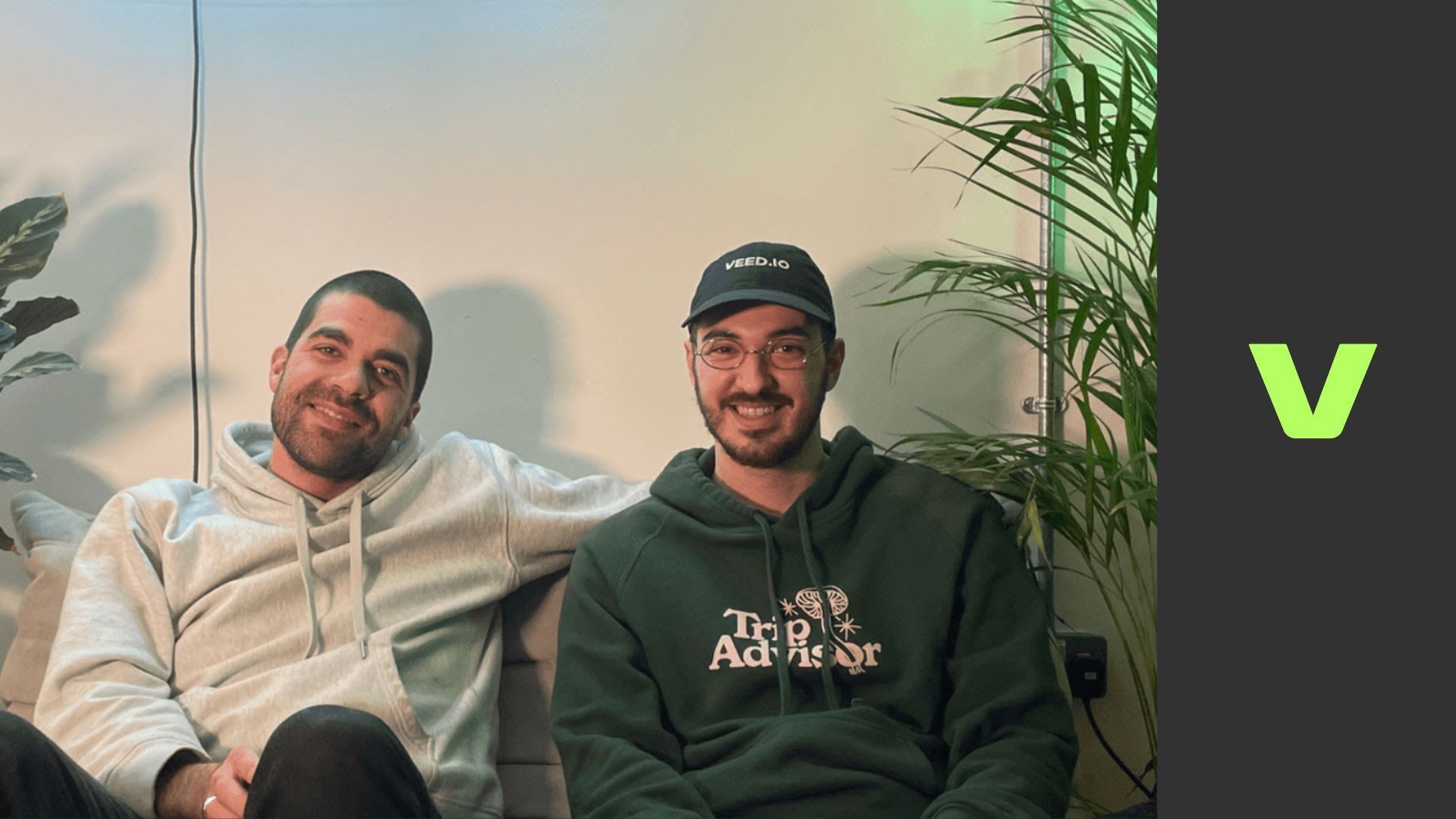
Two strangers — Sabba Keynejad and Timur (Tim) Mamedov — meet at an online hackathon and quickly realize they’re obsessed with the same problem:
Video editing software sucks.
It’s clunky.
It’s slow.
It’s built for professionals, not creators.
And it completely ignores how the internet actually communicates today — through short, fast, social-first videos.
Sabba, with a deep background in design and video workflows, had felt this pain for years.
Tim was still a university student…but so committed that he literally wrote his final dissertation on VEED as a business idea.
At first, the duo built a tool that turned blog posts into videos.
It flopped.
But instead of quitting, they leaned on a key founder instinct:
Pivot toward the problem you know best.
Not the problem you wish existed.
And that was the birth of…
🎬 PART 2 — The Birth of VEED.io
London.
Sabba and Tim launched VEED.io — a simple, clean, entirely browser-based video editor.
Just an MVP.
No funding.
No pedigree.
No Silicon Valley buzz.
They didn’t want to reinvent Premiere Pro.
They wanted to reinvent accessibility.
Their thesis was simple but spot-on:
“Video editing should be as easy as editing a Google Doc.”
This became their north star for the next five years.
And the best part?
They didn’t need a fancy office or VC dollars.
Just:
a laptop
a browser
a problem worth solving
and insane persistence
Run ads IRL with AdQuick

With AdQuick, you can now easily plan, deploy and measure campaigns just as easily as digital ads, making them a no-brainer to add to your team’s toolbox.
You can learn more at www.AdQuick.com
🛠️ PART 3 — 2019: The YC Rejection That Fueled a Revolution
In 2019, Sabba and Tim applied to Y Combinator.
They had:
users
momentum
a product people liked
But no paying customers.
YC rejected them.
Most founders would spiral.
These two? They built their payment system that same weekend.
By Monday, they had:
20 paying customers.
A real business model.
A new sense of direction.
This was a defining moment.
Not because they got rejected — but because of how they responded.
This became VEED’s personality as a company:
move stupidly fast
learn aggressively
build publicly
ignore pedigree
trust the grind
🚀 PART 4 — Growing to 50,000 Users With Zero Marketing Budget
While other startups burned millions on acquisition, VEED took a completely different approach:
SEO × Content × Community
A lethal combination.
Here’s how they did it:
1. SEO landing pages for every conceivable tool
They built hundreds of pages ranking for terms like:
“Add subtitles online”
“Cut video online”
“Crop video for TikTok”
Millions of people searched for these daily.
VEED became the default answer.
2. Fast, useful free tools
People didn’t just click.
People converted.
3. Community engagement
Creators shared VEED tutorials.
Fans posted hacks.
Educators used it in classrooms.
Momentum snowballed.
By the end of 2019:
50,000 monthly active users
$0 spent on ads
growing faster than many VC-backed competitors
This period built VEED’s foundation:
Build something insanely simple.
Make it free and accessible.
Let the internet do the rest.
📈 PART 5 — 2020–2021: The Explosion
During COVID, remote teams, creators, teachers, and solopreneurs all needed one thing:
Simple video tools.
Premiere Pro was too heavy.
iMovie was too limited.
Loom solved recording, not editing.
VEED became the easiest way to:
add captions
clean audio
cut clips
make social content
collaborate in the browser
Their metrics went ballistic.
🟣 2020: Hit $1M ARR
🟣 2021: Hit $7M ARR
🟣 Bootstrapped the entire time
🟣 Profitable
🟣 Growing faster than some VC-backed unicorns
This is when the industry finally realized:
VEED wasn’t a toy.
It was a movement.
💰 PART 6 — 2022: Sequoia Comes Knocking
After years of turning down investors, VEED finally said yes.
February 2022:
They raised $35M Series A led by Sequoia Capital, one of the most prestigious firms in Silicon Valley.
But here’s the twist:
They didn’t need the money.
They took it to go bigger, faster.
At this point VEED already had:
1 million+ users
explosive SEO growth
profitable operations
This funding allowed them to:
hire world-class engineers
scale infrastructure
expand features
compete with incumbents
move into AI
And that last point?
It changed everything.
🤖 PART 7 — 2023–2025: The AI Takeover
While most video editors were still “dumb tools,” VEED went all-in on AI:
AI auto-subtitles
AI clip generators
AI background remover
AI voice cleanup
AI video creation
AI text-to-video workflows
This transformed VEED from a tool → into a platform.
Creators didn’t just edit videos.
They generated them.
Businesses didn’t just produce content.
They automated it.
Growth skyrocketed.
🟣 $40M ARR
🟣 10M monthly active users
🟣 200+ employees
🟣 One of the fastest-growing SaaS companies in Europe
Not bad for a startup YC rejected.
🧠 PART 8 — Why VEED Beat Every Incumbent
Let’s break down the strategic execution:
1️⃣ Simplicity > Complexity
They built the Google Docs of video editing.
Nothing to install.
Nothing to update.
Nothing confusing.
2️⃣ SEO as a Superpower
While competitors ran ads, VEED harvested intent.
3️⃣ AI at the perfect time
When AI caught fire, VEED was already deeply integrated into the browser.
They became the perfect delivery system.
4️⃣ Bootstrapping discipline
Being profitable early made VEED:
efficient
creative
resilient
allergic to waste
5️⃣ YC rejection shaped their culture
Instead of validation, they got motivation.
They didn’t need permission to win.
🧨 PART 9 — Strategic Lessons for Founders
🔥 Lesson 1: You don’t need pedigree to win.
YC didn’t believe in them.
The market did.
🔥 Lesson 2: Build for the shift, not the status quo.
Video exploded post-2017.
VEED rode the wave.
🔥 Lesson 3: Distribution is more important than innovation.
SEO was their real growth engine.
🔥 Lesson 4: You can bootstrap your way to tens of millions in ARR.
VC is optional.
Not mandatory.
🔥 Lesson 5: Pivot fast, build faster.
Their first idea failed.
Their second became a rocket.
Shoppers are adding to cart for the holidays

Over the next year, Roku predicts that 100% of the streaming audience will see ads. For growth marketers in 2026, CTV will remain an important “safe space” as AI creates widespread disruption in the search and social channels. Plus, easier access to self-serve CTV ad buying tools and targeting options will lead to a surge in locally-targeted streaming campaigns.
Read our guide to find out why growth marketers should make sure CTV is part of their 2026 media mix.
🏁 Deal Lift Takeaway
There’s more than one way to win.
Not every great company is born at Stanford.
Not every unicorn is minted in YC.
Not every founder needs VCs to get started.
Sometimes it’s just:
vdvdvdvdvdtwo friends
a browser
a problem the world underestimates
and relentless execution
VEED.io proved that great companies don’t need perfect beginnings.
You can start small.
You can stay small.
And still build something massive.
Because the market doesn’t care about your pedigree.
It cares about your product.
Transform your bath or shower — in as little as one day.
The Jacuzzi® name is synonymous with quality. Right now Jacuzzi is waiving all installation costs plus no interest and no payments for up to one year.